
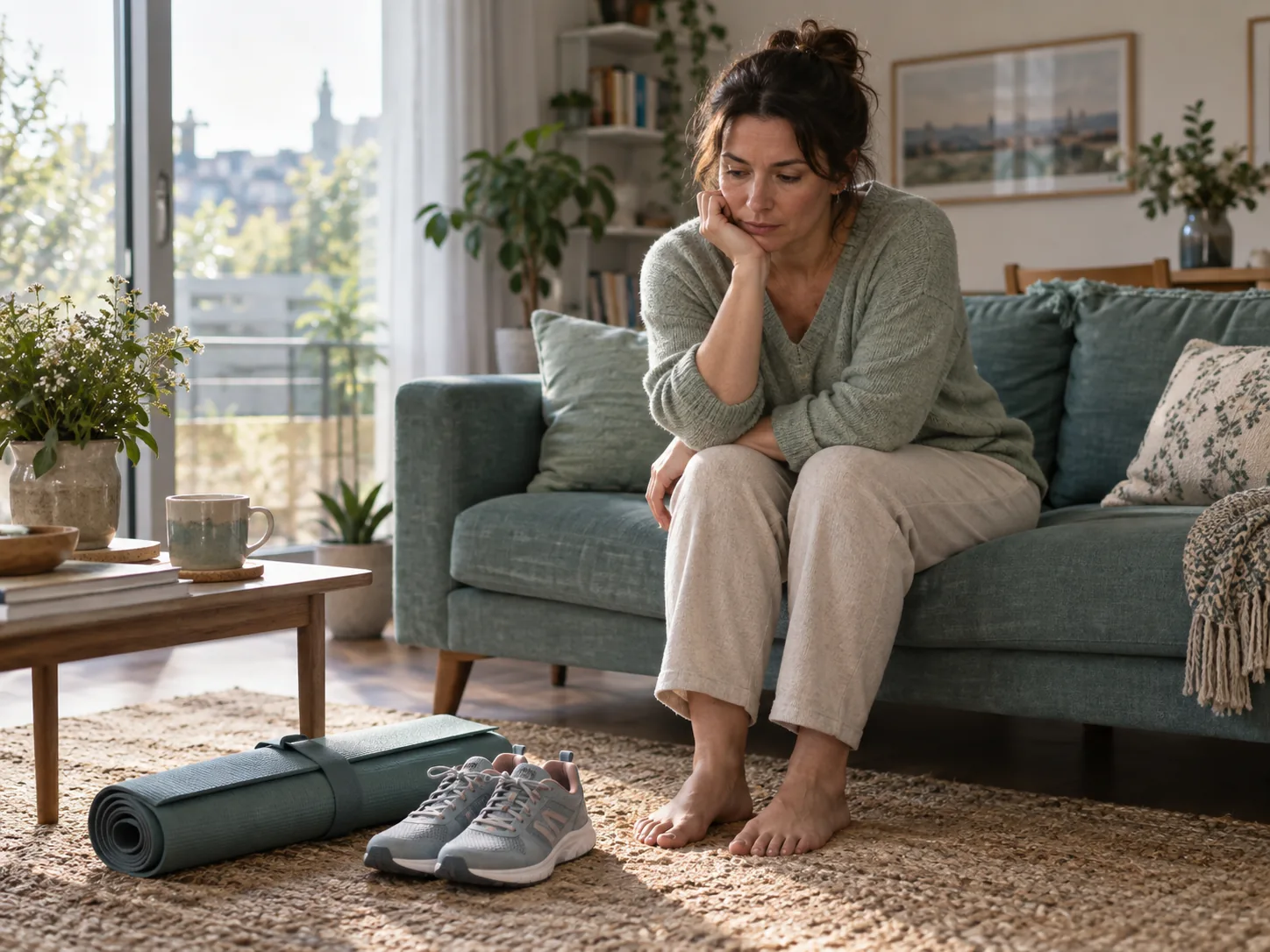
How do activities gradually drop out of the week?
Imagine Roksolana: she still goes to work, but for a month she has not walked to the shops, and she puts off housework until the weekend, which she also spends on the sofa. The change built up unnoticed, and she only became aware of it when a friend asked why she had not been to the pool for so long.
Or Danylo, who cut back on exercise after an illness. Two months have passed, and he still limits himself to one short walk a week. He cannot tell whether his stamina is recovering or something else is holding him back.
Or Orest, who used to take his children to the market and the park on Saturdays. Now he puts on news videos in the morning “for five minutes”, and the day off passes in front of the screen. His wife takes the children to the park, and each time he promises to come next time.
Or Khrystyna, whose week has lost yoga, meeting a friend and cooking, one after another: now she orders food and hardly leaves home after work. She has no wish to bring any of it back, and she cannot remember when it all began.
For Roksolana and Khrystyna activities dropped away gradually, Danylo is held back by recovery after an illness, and Orest’s days off have been taken over by the news. The section “Why getting back to things is hard and where to start” explains why the first step back is so hard in this situation.
If at least one of these stories resembles yours, think about what dropped out of your week first. If none of them fits, the questions in the section “What has dropped out of your usual week?” can help you describe the change.
Why getting back to things is hard and where to start
To bring even one activity back into your week, you need three things:
- Reserves. How much energy is left after the things you have to do – even if it is very little.
- A specific small goal. “Walk to the park and back” rather than “get back to my old fitness”.
- Confidence that the goal is achievable. Right now, not at your old pace.
It is even better if the completed task brings a little enjoyment. When one item on this list is missing, the first step feels harder than the task itself. In our example, Danylo lacks confidence in his strength after the illness, and Orest lacks a clear goal for his day off.
So start small:
- One activity a week. A short walk, one household task or a brief conversation with someone close – something you can do without excessive strain.
- Notes afterwards. Notice which activities improve how you feel and after which ones the load becomes too much.
- Your health. If your activity dropped because of a physical illness or pain, adjust the load in line with medical advice.
What has dropped out of your usual week?
Reduced activity is a state in which a person starts doing noticeably less than usual: going out less, moving less, cutting back on contact with others and putting off familiar tasks. If even a small step takes great effort, answer a few questions:
- When did your activity start to drop: gradually or suddenly?
- Which areas changed most: work, study, social contact, physical activity, self-care or leisure?
- What gets in the way: lack of energy, lack of desire, anxiety, pain or physical limitations?
- Do you also have low mood, loss of enjoyment, apathy or a sense of hopelessness?
- Have your sleep, appetite, concentration or weight changed?
- Has it become harder to start actions, or have your movements become noticeably slower?
If your physical health has suddenly got worse, go straight to the section “When doing less is a reason for a consultation”. Otherwise, your answers will help you understand what exactly is limiting you, and the right help depends on that.
If your week has been emptying out for more than a month, a psychiatrist can help work out what exactly is limiting you and choose help with you.
Consultation booking form.Reduced activity can have different causes
Reduced activity can result from pain, fatigue, recovery after an illness, anxiety or loss of interest. That is why it matters not only how much you do but why you have stopped: in our example, Danylo is limited by his stamina after an illness, while Khrystyna has lost the wish.
If low mood and loss of interest in life persist along with reduced activity, a doctor may also assess for depression. Doing less on its own does not yet mean that you have this disorder.
Doing less – but why?
Reduced activity describes what has changed in your week, and neighbouring states describe why. Compare which is closer to your experience.
- Low energy. You would like to do more, but your energy runs out before the tasks do. See the page on low energy.
- No wish to start. Tasks seem necessary, but you cannot get going. Compare with the description on the lack of motivation page.
- Apathy. You stop caring whether things get done. Read more on the page about apathy.
- Social isolation. Above all, meetings and conversations disappear from your week. The page on social isolation explains how to tell solitude from isolation.
These states often occur together, and one sign on its own decides nothing: what matters is how they add up.
Who can help work out what is limiting your activity?
If your main difficulties involve mood, thoughts or behaviour, you can start with a psychiatrist. They will ask how your week has changed and what stops you from getting back to things, and will discuss help with you. With physical complaints, an assessment by a family doctor is also appropriate.
The course of a first appointment is described on the initial psychiatric consultation page. You can see the specialists’ areas of work on the clinic’s doctors page.
When doing less is a reason for a consultation
- If reduced activity came on suddenly or comes with marked physical weakness, pain, breathlessness, problems with coordination or speech, or other acute symptoms, you need urgent medical help: call 103 or 112 in Ukraine.
- If a person spends most of the time in bed, stops keeping up hygiene, eating regularly, leaving home or managing basic daily tasks, a consultation is especially important.
- If reduced activity lasts several weeks, gradually worsens or noticeably affects work, study, relationships and the ability to look after yourself, see a doctor or mental health professional.
- If your activity dropped after an illness and is slowly coming back, continue with the steps in the section “Why getting back to things is hard and where to start”, following your doctor’s advice.
- If what has decreased most is meeting people or energy, compare your state with the descriptions in the section “Doing less – but why?”.
If point 2 or 3 is closer to you, book a consultation. You do not need a ready explanation for it.
Consultation booking form.Common questions
Usually not. If these activities used to be manageable for you and have now dropped away, the change is often linked to fatigue, pain, anxiety or changes in mood. So it is more useful to look for the cause than to blame yourself.