
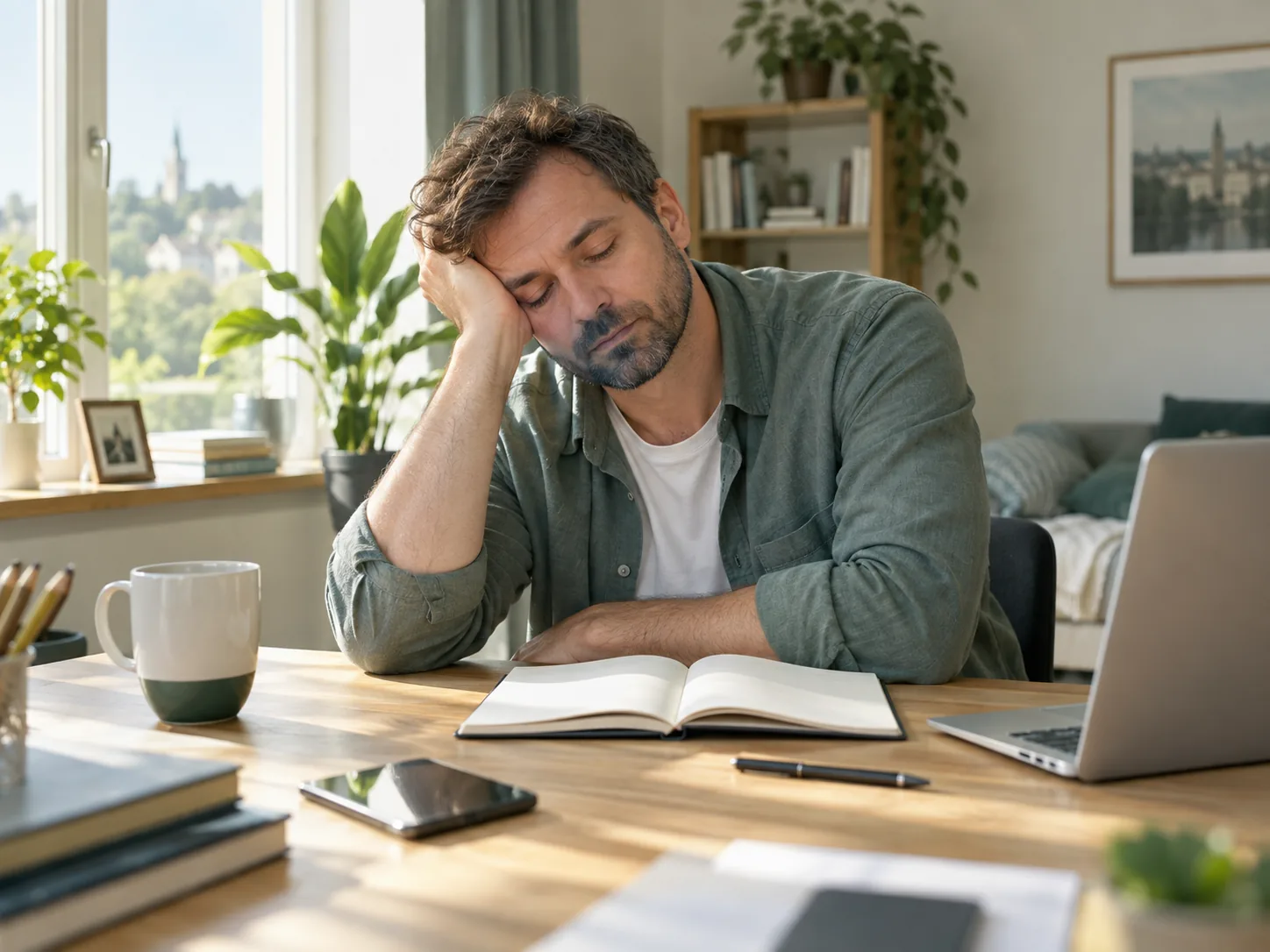
When do you fall asleep unintentionally?
Excessive sleepiness is a state in which it is hard to stay alert during the day and there is a strong need to sleep, sometimes even after enough sleep at night. Think of the last day when you felt drowsy and answer these questions:
- How long have you felt sleepy, and does it happen every day?
- How many hours do you usually sleep at night?
- Do you feel alert after waking?
- Do you need to sleep during the day?
- Does a daytime nap help?
- Do you ever fall asleep without meaning to, for example in a meeting or on public transport?
- Is there loud snoring, pauses in breathing, choking or frequent waking at night?
If you have fallen asleep or felt you might fall asleep at the wheel, go straight to the first point of the section “Daytime sleepiness: what to do first”.
If you have been drowsy during the day for several weeks, a doctor can help find the cause and decide what assessment is needed.
Consultation booking form.Who can find out where daytime sleepiness comes from?
For new or persistent physical symptoms, start with a family doctor. Further investigations depend on your symptoms and examination, not a standard checklist. Mood or anxiety difficulties can also be discussed with a psychiatrist.
The initial psychiatric consultation page explains what a psychiatrist does at a first consultation. The profiles on the clinic’s doctors page can help you choose a specialist.
How sleepiness catches people off guard
Imagine Oleksii: he falls asleep in a quiet meeting even though he tried to go to bed on time. He feels embarrassed, but this is useful information for a doctor.
Or Zoia, who becomes sleepy on the journey home after a night shift. She asks for a lift instead of driving herself.
Or Yukhym, who keeps opening a news website throughout the day: it is the only way he can avoid dozing off over a report. As soon as he closes the tab, his eyes start closing again, although he slept seven hours.
Or Veselyna, who a week after starting a new medicine began falling asleep at her desk after lunch. She does not know whether it is linked to the medicine and is right not to stop taking it on her own.
For Zoia sleepiness is linked to shifts, for Veselyna it appeared after starting a medicine, while Oleksii and Yukhym fall asleep although they sleep enough. The section “Why is sleepiness different from fatigue?” explains why this should not be called simply tiredness.
If at least one of these stories resembles yours, note where and when you feel drowsy. If none of them fits, go back to the questions in the section “When do you fall asleep unintentionally?”.
Sleepiness, tiredness or long sleep?
Sleepiness is often confused with neighbouring states. Its main feature is a tendency to fall asleep, not just a sense of exhaustion. Compare which is closer to your experience.
- Constant fatigue. You have little energy, but you are not drawn to sleep during the day. Read more on the page about constant fatigue.
- Sleeping too long. Your night-time sleep has become noticeably longer and waking is hard. Compare with the description of prolonged sleep.
- Unrefreshing sleep. You do not feel rested in the morning, although you slept enough. See the page on unrefreshing sleep.
- Low energy. It is hard to get going with tasks, but your eyes do not close during the day. The page on low energy looks at how to describe this.
These states often occur together, and one of them on its own decides nothing.
Why is sleepiness different from fatigue?
Excessive sleepiness can be linked to sleep loss, sleep-related breathing problems, medicines and other conditions. It is important to describe falling asleep unintentionally rather than simply calling it tiredness. A doctor will decide whether a specialist sleep assessment is needed.
If low mood and loss of interest in life persist along with sleepiness, a doctor may also assess for depression. Sleepiness on its own does not yet mean that you have this disorder.
Daytime safety matters more than pushing through
Until the cause is clear, the main thing is not to take risks:
- Enough sleep. If sleepiness is linked to chronic sleep loss, first make sure you have enough time for night-time sleep and a stable sleep and wake-up schedule.
- Alcohol and medicines. Pay attention to sleep quality, alcohol and medicines that can increase sleepiness. Do not stop a prescribed medicine on your own.
- Not just more sleep. If you sleep enough but marked sleepiness continues, sleeping longer does not always solve the problem. In this situation it is important to find out the cause.
Until you have been assessed, take special care with driving and other potentially dangerous activities if there is a risk of falling asleep unintentionally.
Daytime sleepiness: what to do first
- If you fall asleep or feel that you might fall asleep while driving, stop driving until the cause of the sleepiness is found.
- If there is loud snoring, pauses in breathing during sleep, sudden episodes of falling asleep, marked difficulty waking up or other unusual sleep symptoms, a medical assessment is especially important.
- If sleepiness appeared after you started a medicine, do not stop it on your own; discuss it with the doctor who prescribed it.
- If excessive sleepiness lasts several weeks, occurs despite enough sleep or noticeably affects work, study and daily activity, see a doctor. If low mood, loss of interest or hopelessness come with it, see a mental health professional as well.
- If sleepiness is linked to sleep loss or shifts, start with the steps in the section “Daytime safety matters more than pushing through”. If it does not get easier with enough sleep, go back to point 4.
If point 2 or 4 is closer to you, book a consultation. Tell the doctor where and when you fell asleep unintentionally.
Consultation booking form.Common questions
No. Coffee does not guarantee safe driving. If staying awake is difficult, stop in a safe place and arrange other transport or rest.