
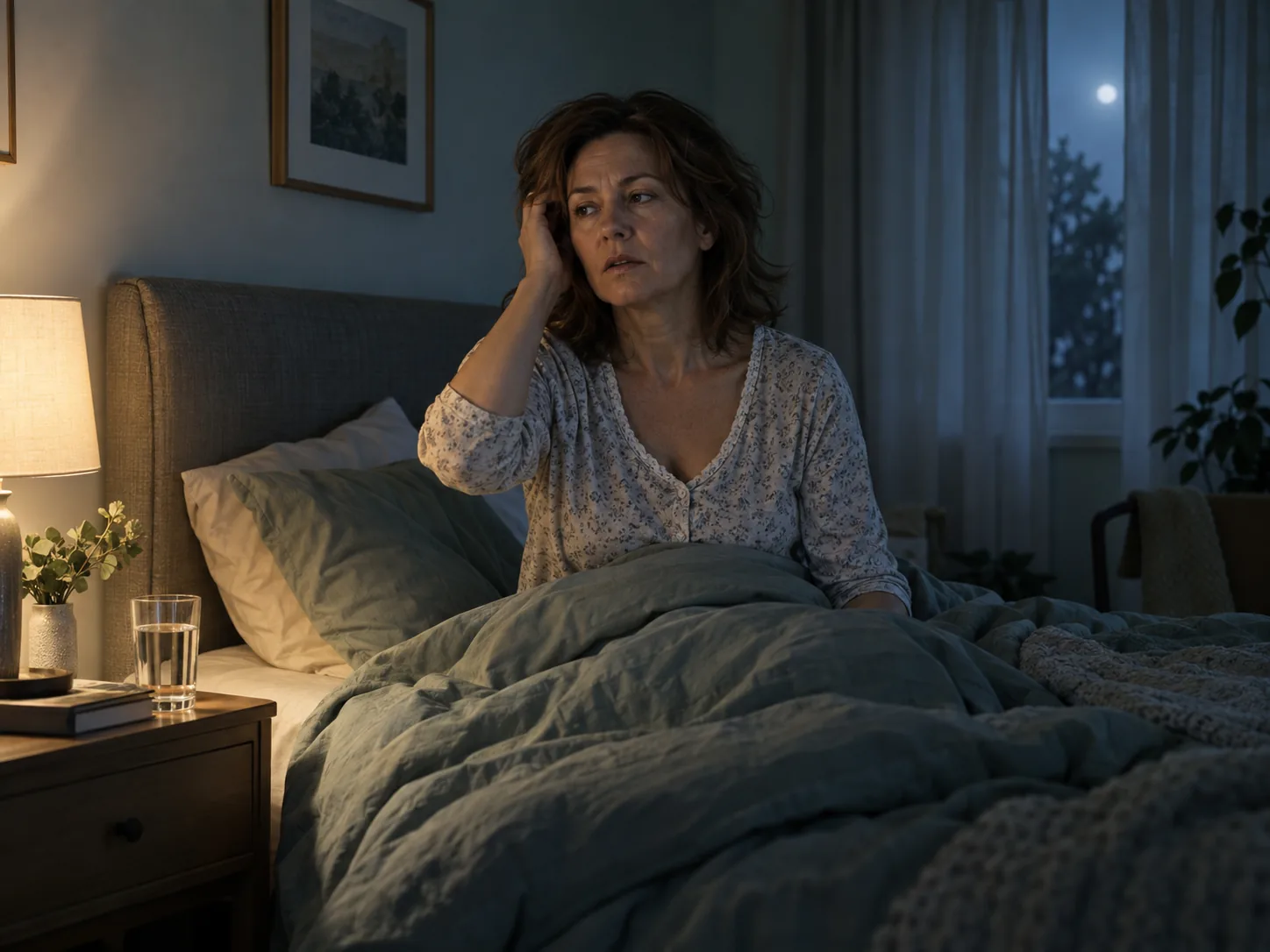
What interrupts the night for different people?
Imagine Nina: she wakes around three and immediately starts thinking about a morning meeting. Sleep returns only when it is almost time to get up.
Or Arkadii: his wife hears loud snoring and pauses in his breathing, while he remembers only a restless night and a heavy head in the morning. Her account is worth passing on to a doctor.
Or Raisa, who, when she wakes at night, first checks whether there was an air raid alert in the city where her parents live. She reads the local news from there, texts her mother although she is asleep, and falls asleep again only an hour later.
Or Hennadii, who is woken by back pain when he turns over in his sleep. He gets up, walks around the flat and only then can lie down again.
Nina is woken by thoughts, Arkadii possibly by breathing problems, Raisa by worry about her parents and Hennadii by pain. That is why it matters not only how often you wake but what happens around the waking: the section “Awakenings, breathing, pain and worry” covers this.
If at least one of these stories resembles yours, note what wakes you. If none of them fits, the questions in the section “What do you feel when you wake at night?” can help you describe your nights.
If you wake in the night: what you can do
While the cause is still unclear, here is what helps with the waking itself:
- Do not look at the clock: watching the time often increases anxiety and makes it harder to fall back asleep.
- If you cannot get back to sleep for a long time, get up briefly and do something calm in dim light. Go back to bed when you feel sleepy.
- Keep a stable sleep and wake-up schedule and do not stay in bed awake for long periods.
- Look at evening alcohol: it may make falling asleep easier but make sleep more broken in the second half of the night.
If, like Raisa in our example, you check the news every time you wake, try leaving the feed until morning. Keep the air raid alert app switched on: it will warn you of danger without the feed.
For persistent insomnia, the most studied non-drug treatment is cognitive behavioural therapy for insomnia (CBT-I).
What do you feel when you wake at night?
Frequent night awakenings mean that sleep is interrupted repeatedly during the night. Think of the last night like this and answer these questions:
- How long ago did the night awakenings begin, and how many times a night do they happen?
- What do you notice when you wake: thoughts, pain, shortness of breath, needing the toilet or noise?
- How long do you usually stay awake after waking?
- Can you fall asleep again without much effort?
- Does your sleep feel shallow or restless?
- Do you feel restored in the morning?
- Do you have daytime tiredness, sleepiness, irritability or difficulty concentrating?
If snoring, pauses in breathing, choking or pain come with the awakenings, see the first point of the section “Broken sleep: what to rely on”. If you wake not in the middle of the night but towards morning and cannot get back to sleep, compare this with the descriptions in the section “Night waking, early mornings or light sleep?”.
If your nights have been breaking into fragments for several weeks, a doctor can help you understand what wakes you and decide what help you need.
Consultation booking form.Night waking, early mornings or light sleep?
Broken sleep is easy to confuse with neighbouring difficulties. Compare which is closer to your nights.
- Early waking. Sleep ends towards morning, and you cannot get back to sleep before the alarm. See the page on early morning awakening.
- Light sleep. There may be few awakenings, but sleep feels light and every sound wakes you. Compare with the description of light sleep.
- Insomnia. It is hard not only to get back to sleep at night but also to fall asleep in the evening. The page on insomnia explains how its forms differ.
- Unrefreshing sleep. The night passes with hardly any waking, yet you are not rested in the morning. Read more on the page about unrefreshing sleep.
These difficulties often occur together, and one of them on its own decides nothing. If you recognised yourself in several points, tell your doctor about all of them.
Awakenings, breathing, pain and worry
Awakenings can be linked to noise, pain, worry, needing the toilet or breathing problems. Loud snoring and observed pauses in breathing, as with Arkadii in our example, are worth mentioning to a doctor separately. Changing evening habits does not address every cause.
If low mood and loss of interest in life persist along with broken sleep, a doctor may also assess for depression. Night awakenings on their own do not yet mean that you have this disorder.
Who to tell about interrupted nights
For new or persistent physical symptoms, start with a family doctor. Further investigations depend on your symptoms and examination, not a standard checklist. Mood or anxiety difficulties can also be discussed with a psychiatrist.
The course of a first meeting with a psychiatrist is described on the initial psychiatric consultation page. The specialists’ areas of work are collected on the clinic’s doctors page.
Broken sleep: what to rely on
- If the awakenings come with loud snoring, pauses in breathing, choking, severe pain, frequent urination at night or other physical symptoms, do not put off seeing a doctor.
- If night awakenings occur regularly over several weeks, become more frequent or lead to marked tiredness, sleepiness, reduced concentration or performance, see a doctor.
- If sleep problems come with persistent low mood, anxiety, loss of interest or other noticeable changes in your mental state, see a mental health professional.
- If the awakenings are rare and you fall asleep again quickly, try the steps in the section “If you wake in the night: what you can do”.
- If sleep ends towards morning or feels too light, compare your state with the descriptions in the section “Night waking, early mornings or light sleep?”.
If point 2 or 3 is closer to you, book a consultation. Tell the doctor what you notice when you wake.
Consultation booking form.Common questions
No. Brief awakenings can occur without a disorder. What matters is difficulty getting back to sleep, how you feel during the day and possible causes of the disruption.