
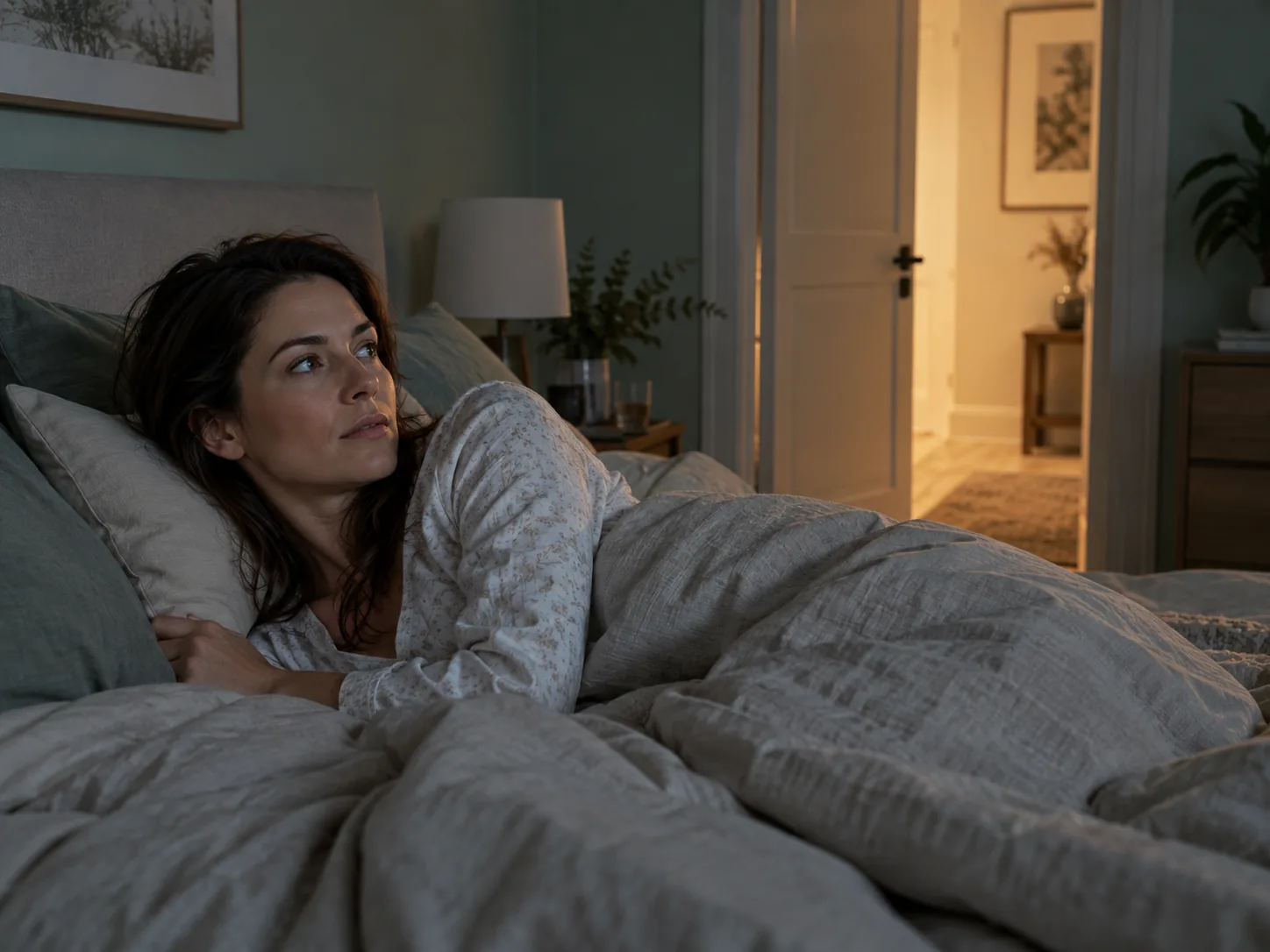
What does light sleep look like for different people?
Imagine Lidiia: she wakes at the sound of the lift and listens to the building for a long time. In the morning those interruptions are what she remembers most.
Or Ihnat, whose watch reported “little deep sleep” although he feels alert. The device’s data begins to worry him more than the night itself.
Or Liubava, who keeps notification sounds on for several news channels “in case something important happens”. Each signal pulls her out of sleep, even when the news turns out to be trivial, and by morning she feels she has hardly slept.
Or Prokhor, who has woken at every rustle since his daughter was born. His daughter has been sleeping through the night for several months, but he still jumps at the slightest sound.
Lidiia and Liubava are woken by sounds, Prokhor by the habit of staying on guard, and Ihnat’s nights seem worse because of his watch data. The section “Light sleep, night waking or unrefreshing sleep?” explains how the feeling of light sleep differs from other difficulties.
If at least one of these stories resembles yours, note what exactly wakes you. If none of them fits, the questions in the section “What to tell a doctor about your nights” can help you describe your nights.
Light sleep, night waking or unrefreshing sleep?
Light sleep is the feeling that sleep is too shallow or easily interrupted. It is easy to confuse with neighbouring difficulties:
- Frequent night awakenings. Sleep is interrupted many times, and you remember almost every waking. See the page on frequent night awakenings.
- Unrefreshing sleep. The night may seem ordinary, but you are not rested in the morning. Read more on the page about unrefreshing sleep.
- Excessive sleepiness. It is hard to stay awake during the day, even if you hardly woke at night. Compare with the description of excessive sleepiness.
- Anxiety. You stay on guard both at night and during the day, and the worry does not let go. If anxiety persists together with low mood, see the page on anxiety with depression.
These states often occur together, and one feeling on its own decides nothing.
Sleep conditions without chasing device scores
Light sleep cannot always be made deeper, but you can remove some of what interrupts it:
- Your bedroom. Keep a stable sleep and wake-up schedule and make the bedroom dark, quiet and comfortable.
- Caffeine and alcohol. Limit caffeine and other stimulants in the afternoon. Alcohol sometimes makes it easier to fall asleep but can make sleep more broken in the second half of the night.
- Notifications. If, like Liubava in our example, you are woken by news channels, mute those channels specifically. Keep the air raid alert app switched on.
- Scores. Checking every morning how “deeply” you slept sometimes increases anxiety about sleep. It is better to look at the overall trend and how you feel during the day than at a single night.
For persistent sleep problems, cognitive behavioural therapy for insomnia (CBT-I) is an effective non-drug approach.
Perceived sleep depth and possible causes of change
Frequent awakenings, noise, tension or worry about rest can heighten the feeling of light sleep. Neither that feeling nor a watch reading can establish your sleep stages. A doctor also considers daytime effects and possible causes of waking.
If low mood and loss of interest in life persist along with light sleep, a doctor may also assess for depression. Light sleep on its own does not yet mean that you have this disorder.
If light sleep has lasted for weeks and you lack energy during the day, a doctor can help work out what is interrupting your nights.
Consultation booking form.What to tell a doctor about your nights
To make the conversation with a doctor specific, think back over the last few nights and answer these questions:
- How long has sleep felt shallow, and does this happen almost every night?
- Do you have frequent or long awakenings at night?
- Do you feel restored in the morning?
- Do you have daytime tiredness, sleepiness, irritability or reduced concentration?
- Do anxious thoughts or inner tension come up before sleep and at night?
- Is there loud snoring, a feeling of not getting enough air, or pauses in breathing that other people have noticed?
If you answered “yes” to the last question, see the first point of the section “Light sleep: what to choose next”.
Where to start a conversation about light sleep
For new or persistent physical symptoms, start with a family doctor. Further investigations depend on your symptoms and examination, not a standard checklist. Mood or anxiety difficulties can also be discussed with a psychiatrist.
The initial psychiatric consultation page explains what a first meeting with a psychiatrist includes. You can see the specialists’ areas of work on the clinic’s doctors page.
Light sleep: what to choose next
- If sleep comes with loud snoring, pauses in breathing, a feeling of suffocation, marked movements during sleep, chronic pain or other physical symptoms, a medical assessment is especially important.
- If shallow or unrefreshing sleep lasts several weeks, is regularly disrupted or leads to marked daytime tiredness, sleepiness and reduced performance, see a doctor.
- If sleep problems come with persistent anxiety, low mood, loss of interest or other marked changes in your mental state, see a mental health professional.
- If you feel alert during the day and what worries you most is your watch data, start with the steps in the section “Sleep conditions without chasing device scores”.
- If what matters more is waking up at night or tiredness in the morning rather than sleep depth, compare your state with the descriptions in the section “Light sleep, night waking or unrefreshing sleep?”.
If point 2 or 3 is closer to you, book a consultation. Tell the doctor what exactly wakes you.
Consultation booking form.Common questions
Not fully: a consumer device cannot diagnose a disorder and only estimates sleep stages. Consider the readings alongside how you feel and discuss persistent concerns with a doctor.